Dad's cooking with heat
The 6 Biggest Cast-Iron Pain Points
Pain Point #1: Seasoning Confusion
Pain Point # 4: Why Food Sticks to Cast Iron & How to Fix It
Pan isn't hot enough before adding food — Cast iron needs to preheat for 3–5 minutes over medium heat before anything goes in. Do the water drop test: a bead of water should skitter and evaporate instantly. A cold pan causes food to bond with the iron.
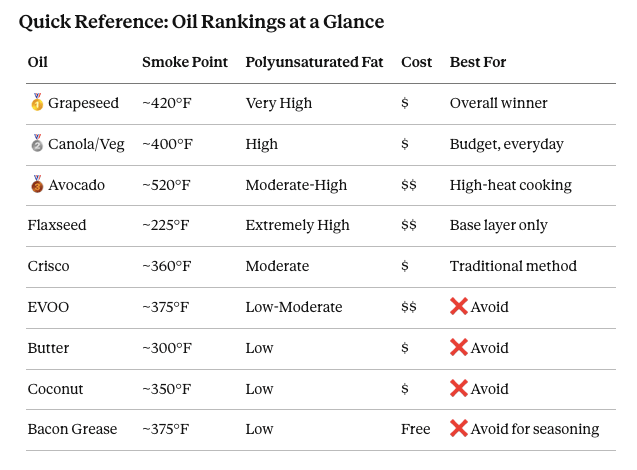
Insufficient or wrong fat — Use enough fat to coat the entire cooking surface, and choose a fat with a higher smoke point (avocado oil, clarified butter, or lard) for high-heat cooking. A thin, even layer before the food hits the pan is non-negotiable.
Pan is under-seasoned or seasoning is damaged — A properly seasoned pan has a built-up layer of polymerized oil that acts as a natural non-stick surface. Re-season by coating the dry pan with a thin layer of flaxseed or vegetable oil and baking it upside-down at 450°F for an hour.
Food is too cold straight from the fridge — Cold proteins especially (chicken, steak, fish) drop the pan temperature drastically and stick. Let proteins rest at room temperature for 20–30 minutes before cooking to ensure even contact and proper searing.
Flipping or moving food too soon — Food will naturally release from cast iron once a proper sear has formed. Be patient — don't force it. If it resists, it's not ready. Give it another 60–90 seconds and try again.
Acidic foods are breaking down the seasoning — Tomatoes, citrus, and wine strip the seasoning layer over time, exposing raw iron. Use cast iron for acidic dishes sparingly, and re-season the pan afterward. For long braises with acidic ingredients, opt for enameled cast iron instead.
Pain Point #2: Rust
Pain Point #5: Cleaning Myths
Pain Point #3: Black Flakes & Weird Residue
Pain Point #6: Heat Management & Cooking Mistakes
What Causes Rust
Moisture left on the pan - Not drying the pan thoroughly after washing is the #1 cause. Even a few drops of water left sitting will begin oxidizing the iron within hours.
Soaking in water - Cast iron should never be submerged or left to soak. Extended water contact will cause rust rapidly.
Improper storage - Storing in humid environments (under the sink, near a dishwasher, or in a damp basement) accelerates oxidation even without direct water contact.
Washing with harsh soap repeatedly - Stripping the seasoning layer exposes bare iron directly to air and moisture, making rust almost inevitable.
Putting it in the dishwasher - The prolonged heat, moisture, and detergent in a dishwasher cycle will destroy seasoning and cause rust every time.
How to Remove Rust
Steel wool or chainmail scrubber - For light to moderate rust, scrub the affected area aggressively with fine steel wool or a chainmail scrubber under warm water until the rust is gone. This is your most direct and effective first step.
Salt + oil paste scrub - Pour a generous amount of coarse kosher salt into the pan, add a small amount of neutral oil, and scrub with a paper towel or cloth in circular motions. The salt acts as an abrasive without damaging the iron.
Baking soda paste - Mix baking soda with a little water to form a paste, apply to rusted areas, and scrub with steel wool. The mild alkalinity helps lift oxidation without being overly aggressive.
White vinegar soak (for heavy rust only) -Mix equal parts white vinegar and water, submerge the pan for no longer than 30 minutes, then scrub. ⚠️ Do not over-soak - vinegar is acidic and will begin eating into the iron itself beyond 30-60 minutes.
Electrolysis (for severe rust) - A more advanced method using a plastic bin, washing soda, water, a battery charger, and a sacrificial piece of steel. The electrical current pulls rust off the pan without any scrubbing. Best for heavily neglected or antique pieces.
After Any Rust Removal — Always Do This
Wash, then dry immediately and thoroughly - place on the stovetop over low heat for 5 minutes to drive out all moisture.
Apply a very thin coat of oil (flaxseed, vegetable, or Crisco) all over, inside and out.
Bake upside-down at 450–500°F for one hour to re-establish the seasoning layer.
Repeat the seasoning process 2–3 times if the rust was severe.
“Soap ruins cast iron.”
Modern dish soap is totally fine for cast iron. Old soaps used lye, which could strip seasoning — today’s soaps don’t. A little soap and warm water will not destroy a well-seasoned pan.“You should never wash cast iron with water.”
Water itself is not the problem. Leaving the pan wet is. Wash it, dry it immediately, then add a very light coat of oil to prevent rust.“Rust means the pan is ruined.”
Surface rust is usually easy to fix. Scrub it off with steel wool or coarse salt, dry the pan, and reseason it. Cast iron is incredibly durable.“You must season the pan after every single use.”
You don’t need a full oven seasoning every time. Most of the time, simply drying the pan well and wiping on a thin layer of oil is enough.“Metal utensils destroy cast iron.”
Metal spatulas and spoons are generally safe and can actually help smooth the seasoning over time. Just avoid aggressively scraping with sharp edges.“A perfectly black pan means it’s perfectly seasoned.”
Color alone doesn’t tell the whole story. A good seasoning is smooth, mostly nonstick, and resistant to rust — even if the pan looks patchy or brown in spots.
Using heat that’s too high too fast
Cast iron heats slowly and holds heat for a long time. Cranking the burner to high can create hot spots and burn food before the pan heats evenly.Not preheating the pan long enough
A cold or unevenly heated pan causes sticking and uneven cooking. Give cast iron several minutes to warm up gradually before adding food.Adding oil too early
Putting oil into a cold pan can lead to gummy residue or smoking. Let the pan heat first, then add oil shortly before cooking.Cooking delicate foods on screaming-hot cast iron
Eggs, fish, and pancakes often stick when the pan is overheated. Medium or medium-low heat usually works better than high heat.Overcrowding the pan
Too much food at once traps steam and prevents proper browning. Leave space between foods for better searing and crust formation.Moving food too soon
Meat naturally releases from cast iron once a crust forms. Constant flipping or scraping too early causes sticking and torn food.Ignoring carryover heat
Cast iron stays hot even after the burner is turned down or off. Food can continue cooking or burn if you don’t adjust early.Using the wrong burner size
A small burner under a large skillet creates uneven heating. Match the burner size as closely as possible to the pan bottom.Pouring cold liquid into a very hot pan
Sudden temperature changes can stress the pan and sometimes cause warping or cracking. Lower the heat slightly before adding liquids.Not drying food before searing
Wet meat or vegetables steam instead of brown. Pat food dry first to get a better crust and prevent sticking.
Using heat that’s too high too fast
Cast iron heats slowly and holds heat for a long time. Cranking the burner to high can create hot spots and burn food before the pan heats evenly.Not preheating the pan long enough
A cold or unevenly heated pan causes sticking and uneven cooking. Give cast iron several minutes to warm up gradually before adding food.Adding oil too early
Putting oil into a cold pan can lead to gummy residue or smoking. Let the pan heat first, then add oil shortly before cooking.Cooking delicate foods on screaming-hot cast iron
Eggs, fish, and pancakes often stick when the pan is overheated. Medium or medium-low heat usually works better than high heat.Overcrowding the pan
Too much food at once traps steam and prevents proper browning. Leave space between foods for better searing and crust formation.Moving food too soon
Meat naturally releases from cast iron once a crust forms. Constant flipping or scraping too early causes sticking and torn food.Ignoring carryover heat
Cast iron stays hot even after the burner is turned down or off. Food can continue cooking or burn if you don’t adjust early.Using the wrong burner size
A small burner under a large skillet creates uneven heating. Match the burner size as closely as possible to the pan bottom.Pouring cold liquid into a very hot pan
Sudden temperature changes can stress the pan and sometimes cause warping or cracking. Lower the heat slightly before adding liquids.Not drying food before searing
Wet meat or vegetables steam instead of brown. Pat food dry first to get a better crust and prevent sticking.
Gallery
Snapshots of cast iron magic in action.


Contact
Questions? Reach out anytime—we’re here.
hello@dadscookwithheat.com
© 2026. All rights reserved.